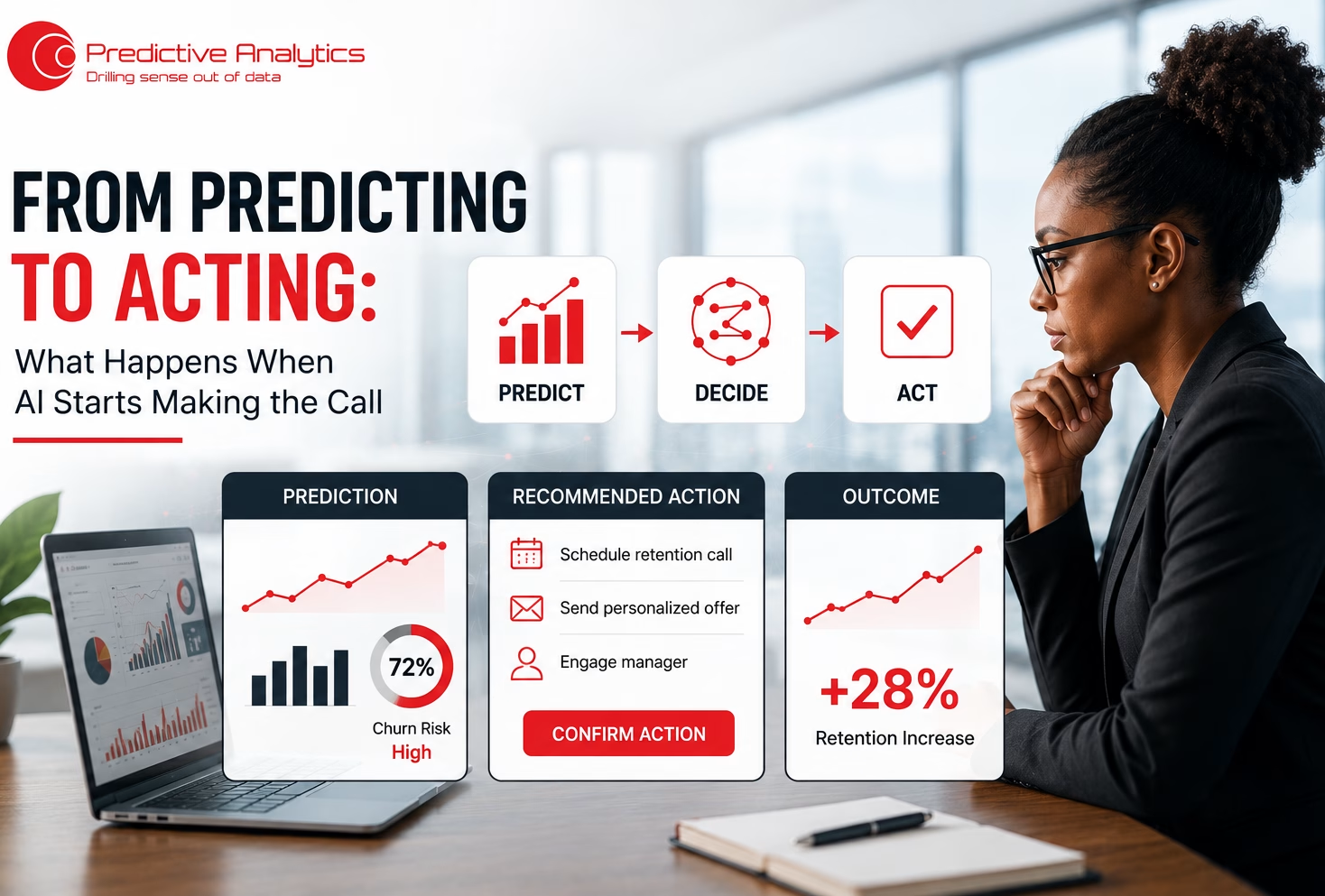

In today’s fast-changing digital world, data is key to innovation and decision-making. Data science is at the center of this change. It uses statistics, mathematics, and computer science to find important insights in big data.
Data science is a big deal for businesses and governments. It helps them make smart choices and find new chances. Data scientists use special tools and methods to find patterns and insights in data.

Data science helps in many ways, like predicting what customers will do or improving healthcare. As more people want data insights, knowing about data science is crucial. It’s important for both individuals and companies.
Key Takeaways
- Data science is a field that mixes statistics, mathematics, and computer science to find insights in data.
- Data science is key for innovation, making smart choices, and changing industries in many areas.
- Data scientists use advanced tools to find patterns, make predictions, and give useful information.
- Data science is used in many fields, like healthcare, finance, and retail.
- Knowing about data science is getting more important in today’s data-focused world.
Understanding the Fundamentals of Data Science
Data science is a field that uses many techniques to find important insights from data. At its heart, data analysis is key. It gives the skills and methods needed to find patterns, trends, and connections in big datasets.
Key Components of Modern Data Analysis
Modern data analysis includes collecting data, cleaning it, doing statistical analysis, and using machine learning. These steps help turn raw data into useful insights. These insights help make better decisions.
The Role of Statistics in Data Science
Statistics is very important in data science. It gives the theory and practice for analyzing data. Concepts like probability, regression, and hypothesis testing are crucial. They help understand the importance and trustworthiness of data findings.
Programming Languages Essential for Data Scientists
Data scientists use many programming languages for their work. Python and R are top choices. They have lots of libraries and tools for working with data. Other languages like SQL and Java are also key. They help data scientists work with data efficiently.
Learning these basics of data science lets professionals use data to make smart choices. They can solve tough problems and find new chances in many fields.
The Evolution of Data Science Through History
Data science has a rich history, starting in the 17th century. It has grown from early statistics and computer science to today’s big data era. The history of data science is filled with key discoveries, tech leaps, and the work of visionary experts.
The early days saw the start of statistical methods in the 17th century. Blaise Pascal and Pierre de Fermat began probability theory. John Graunt and William Petty then used these ideas to study social and demographic data.
- In the 19th century, Sir Francis Galton and Karl Pearson made big strides. They developed correlation and regression analysis.
- The 20th century brought digital computers, changing data processing and analysis. Alan Turing and John Mauchly were key in setting up today’s data science.
The big data revolution of the 21st century has taken data science to new levels. The explosion of digital data and new machine learning tools have changed the game. Now, data science blends statistics, computer science, and domain knowledge to find insights and solve problems in many fields.
“The ability to take data, to understand it, to process it, to extract value from it, to visualize it, to communicate it, that’s going to be a hugely important skill in the next decades.” – Hal Varian, Chief Economist at Google
As data science’s history keeps growing, it’s becoming more crucial for our future. It will help make decisions and open up new possibilities in many areas.
Core Skills Required for Data Science Careers
The field of data science is growing fast, and the need for skilled people is high. To do well in data science, you need technical skills, analytical thinking, and business knowledge. Let’s look at the main skills needed to shine in this field.
Technical Skills and Programming Requirements
At the core of data science is a solid base in programming and technical skills. You should know languages like Python, R, and SQL well. These are key for working with data. Knowing machine learning libraries like TensorFlow and scikit-learn is also a big plus.
Analytical and Problem-Solving Abilities
Data science is more than just numbers. It needs critical thinking and solving complex problems. Good analytical skills help find patterns and insights in big data. Creativity and problem-solving abilities are also key, as data scientists often face new challenges.
Business Acumen and Communication Skills
While tech skills are important, data scientists also need to understand business and communicate well. Business acumen helps them match their work with the company’s goals. Communication skills let them share their findings clearly with others.
By combining data science skills, technical skills, and analytical abilities, you can succeed in this exciting field.
Data Science vs. Traditional Analytics: Key Differences
Data analysis has changed a lot, moving from traditional analytics to data science. Both aim to find valuable insights from data. But, they use different methods and tools.
Traditional analytics sticks to old ways, using historical data and simple statistics. On the other hand, data science uses many tools like machine learning and real-time data processing.
| Characteristic | Traditional Analytics | Data Science |
|---|---|---|
| Data Sources | Structured, historical data | Structured, unstructured, and real-time data from various sources |
| Analytical Approach | Descriptive and retrospective | Predictive, prescriptive, and real-time |
| Techniques | Statistical analysis, reporting, and business intelligence | Machine learning, artificial intelligence, and advanced algorithms |
| Outcomes | Answering “what happened” and “why” | Predicting future outcomes and prescribing optimal actions |
Data science does more than just look at past data. It uses advanced methods to find new patterns and predict trends. This makes data science more powerful than traditional analytics.

Using data science fully can help businesses stay ahead. It drives innovation and leads to better decisions. This can really change how a business does.
Real-World Applications of Data Science
Data science has changed how we solve problems in many fields. It’s used in healthcare, finance, and e-commerce, among others. Let’s look at some examples where data science is making a big difference.
Healthcare and Medical Research
In healthcare, data science is changing how we find, treat, and prevent diseases. Healthcare analytics help doctors make better choices and care for patients better. It also helps in finding new drugs and improving clinical trials.
Financial Services and Banking
Financial data science is key in finance. It helps predict things, spot fraud, and improve investments. Banks use it to check credit risks and serve customers better. Insurance companies use it to set prices and check claims.
E-commerce and Retail Solutions
In e-commerce and retail, data science applications are all about making things better for customers. It helps in giving personalized advice, running smart marketing, and managing supplies. This way, businesses can serve customers better and make smarter choices.
| Industry | Data Science Applications |
|---|---|
| Healthcare | Predictive modeling, personalized treatment, drug development |
| Finance | Credit risk assessment, fraud detection, investment optimization |
| E-commerce | Personalized recommendations, targeted marketing, supply chain optimization |
Data science is changing many industries. As it grows, we’ll see even more ways it can help solve problems and make businesses succeed.
Essential Tools and Technologies in Data Science
In the world of data science, many tools and technologies have come to help. They make work easier and help make decisions based on data. These tools, like data visualization software and machine learning frameworks, change how data scientists work.
Python is a key tool for data scientists. It’s a programming language with many packages for data work. Packages like NumPy, Pandas, and Scikit-learn make it great for data work.
Tableau is another important tool. It’s software for making data look good and interactive. It works with many data sources, helping data scientists share their findings well.
- Apache Spark: A powerful tool for big data, making data analysis faster.
- TensorFlow: A Google-developed framework for complex neural networks and deep learning.
- R: A language and environment for statistics and graphics, used by many data scientists.
These are just a few tools available to data professionals today. As data science grows, so will the tools to help with it. This means data scientists will have more ways to solve problems and find important insights.
“The ability to take data—to be able to understand it, to process it, to extract value from it, to visualize it, to communicate it—that’s going to be a hugely important skill in the next decades.”
– Hal Varian, Chief Economist at Google
The Data Science Process and Methodology
Knowing the data science process is key for successful data projects. It covers several stages, each needing careful planning. Let’s explore the main steps of the data science lifecycle.
Data Collection and Preprocessing
The first step is to collect data from different sources. This data can be structured, semi-structured, or unstructured. After gathering, it must be thoroughly preprocessed to ensure quality and readiness for analysis.
Preprocessing cleans, transforms, and normalizes the data. It fixes any issues, missing values, or outliers. This step is vital for preparing the data for analysis.
Model Development and Validation
With the data prepped, the next step is to create predictive models. These models help extract insights and make informed decisions. This involves choosing the right modeling techniques, training the models, and testing their performance.
Model validation is crucial. It checks if the models are accurate, reliable, and work well with new data. This includes cross-validation, holdout testing, and checking performance metrics.
Implementation and Monitoring
After validating the models, it’s time to implement them. This might mean adding them to existing systems or deploying them in production. It could also involve making them available through APIs.
Continuous monitoring is vital. It ensures the models stay effective and relevant. This includes tracking metrics, spotting data changes, and adjusting the models or the data science process as needed.
By following this detailed data science process, organizations can fully utilize their data. They can make better decisions and drive innovation.
Machine Learning’s Role in Data Science
Machine learning is key in data science today. It’s a part of AI that helps find patterns and predict outcomes. This makes data science work more efficient and accurate.
Machine learning has many techniques and uses. It includes supervised and unsupervised learning. These help with tasks like predicting trends and recognizing images.
- Predictive analytics for forecasting trends and future outcomes
- Customer segmentation and personalization in e-commerce and retail
- Fraud detection and risk assessment in financial services
- Image and speech recognition for advanced user interfaces
- Recommendation systems for content and product suggestions
As data grows, machine learning’s value increases. It helps analyze and understand large datasets. This integration unlocks data’s full potential, driving innovation and improving decisions.
“Machine learning is the foundation of data science, enabling us to uncover hidden patterns and make accurate predictions from vast datasets.”
The connection between machine learning and AI in data science will keep growing. Advances in deep learning and natural language processing are exciting. Knowing machine learning is essential for data science success.
Ethical Considerations and Data Privacy
Data science is growing fast, and so are the ethical and privacy issues. As data makes more of our choices, we must use it wisely. It’s key to collect, analyze, and use data in a responsible way.
Data Protection Regulations
Strong data protection laws, like the GDPR in the European Union, are crucial. They protect personal info and let people control their data use.
GDPR rules require getting clear consent, keeping data safe, and being open about data use. Not following these can lead to big fines and harm to reputation.
Ethical Guidelines for Data Scientists
The data science world also has its own ethics rules. These rules focus on using data fairly, without bias, and with respect for privacy.
- Ensuring data accuracy and integrity
- Protecting sensitive or personal information
- Considering the societal impact of data-driven decisions
- Promoting transparency and accountability in data practices
Following these guidelines helps build trust in the field. It ensures data benefits everyone, not just a few.
“The ethical use of data is not just a box to check, but a fundamental responsibility that data scientists must embrace.”
Future Trends in Data Science
The world is becoming more data-driven, and data science is set to change in exciting ways. Experts say the field will grow with new technologies, more job roles, and big impacts on industries.
Emerging technologies like AI, machine learning, and natural language processing are changing data science. These tools will help data scientists solve complex problems, automate tasks, and find deeper insights in big datasets. They will change how we process, analyze, and use data for innovation and making decisions.
The job market for data science is also growing, with more demand for specialized roles. As companies see the value of data insights, they need more data analysts, engineers, and scientists. These professionals will need to keep learning and adapting to new industry needs.
FAQ
What is data science?
Data science is a field that mixes statistics, math, computer science, and domain knowledge. It helps find insights and value in data. It involves collecting, processing, analyzing, and interpreting data to solve complex problems and make informed decisions.
What are the key components of modern data analysis?
Modern data analysis includes collecting, preprocessing, and exploring data. It also involves statistical modeling, machine learning, and data visualization. These steps help turn raw data into useful insights.
What is the role of statistics in data science?
Statistics is key in data science, providing a base for analysis and modeling. It uses concepts like probability and regression to understand data. This helps make inferences and draw conclusions.
What programming languages are essential for data scientists?
Python and R are top choices for data science. They offer tools for data manipulation, analysis, and visualization. SQL, Java, and Scala are also used in data science projects.
How has data science evolved over time?
Data science has grown from early statistical methods to modern big data analytics. Computing power growth, data explosion, and machine learning advancements have been key milestones.
What technical skills are required for a data science career?
Data science requires skills in programming languages like Python and R. It also needs data manipulation and cleaning knowledge. Understanding statistical and machine learning techniques is crucial, along with big data and cloud computing expertise.
What analytical and problem-solving abilities are important for data scientists?
Data scientists need strong analytical and problem-solving skills. They must think critically, identify data sources, formulate hypotheses, and interpret results. This helps derive meaningful insights and recommendations.
How do data science and traditional analytics differ?
Data science uses advanced techniques like machine learning and big data processing. Traditional analytics focuses on descriptive and predictive modeling. Data science also includes prescriptive analytics, recommending actions based on data insights.
What are some real-world applications of data science?
Data science is used in many fields. In healthcare, it helps predict diseases and personalize medicine. In finance, it detects fraud and manages risks. Retail uses it for customer segmentation and personalized recommendations. Transportation benefits from traffic optimization and predictive maintenance.
What are some essential tools and technologies in data science?
Important tools include data visualization software like Tableau and Power BI. Machine learning frameworks like TensorFlow and PyTorch are also key. Big data platforms like Hadoop and Spark, along with cloud services like AWS and Google Cloud, are essential.
What is the typical data science process and methodology?
The data science process includes collecting and preprocessing data, exploratory analysis, model development, and deployment. It also involves continuous monitoring and improvement. This ensures actionable insights and solutions.
How does machine learning fit into data science?
Machine learning is a core part of data science. It allows models to learn from data and make predictions or decisions. Data scientists use various machine learning techniques to solve complex problems.
What are the ethical considerations in data science?
Ethical considerations include data privacy and protection regulations like GDPR. There’s also the issue of bias in data and algorithms. Data scientists must follow ethical guidelines and best practices for fair and transparent data use.
What are the future trends in data science?
Future trends include more cloud computing and the rise of edge computing and IoT. Real-time data processing, natural language processing, and computer vision advancements are also expected. Data science will integrate with sustainability and social impact domains.